
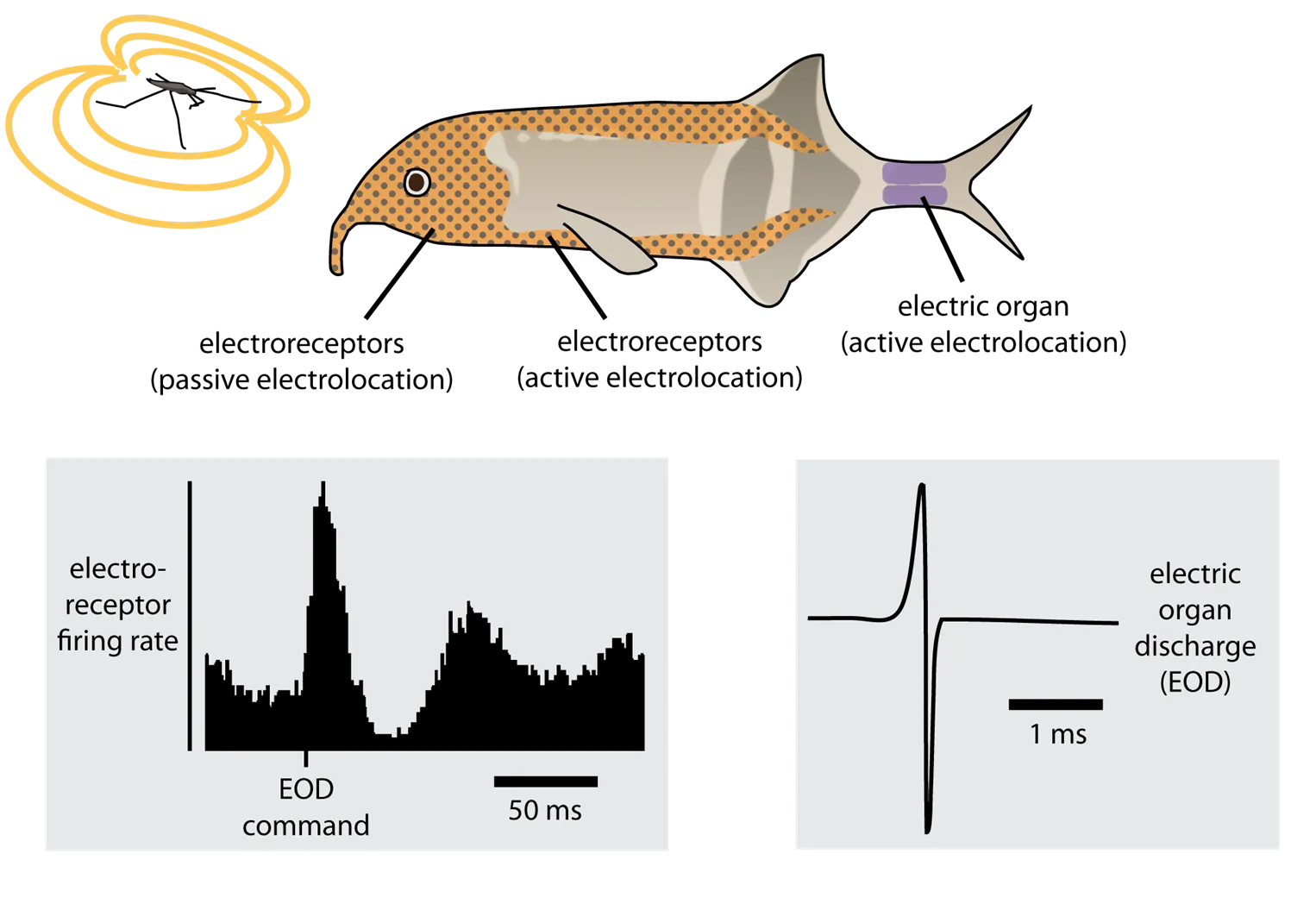
Schematic illustrating the problem of self-generated electrosensory input for the passive electrosensory system of mormyrid fish. Electric fish possess receptors (orange shading) that sense voltage across the skin, such as those generated by invertebrate prey (upper left) as well an electric organ in the tail. The electric organ generates a brief pulse of electricity known as an electric organ discharge (EOD) (lower right). EODs are used by the fish for communication and active electrolocation. However, the EOD also strongly activates electroreceptors tuned to low-frequency fields such as those due to prey (lower left). Neurons in the electrosensory lobe learn to predict and cancel out the unwanted effects of the EOD (image by Ann Kennedy).